Cricket Pitch Length in Feet: Why Is 22 Yards So Important?
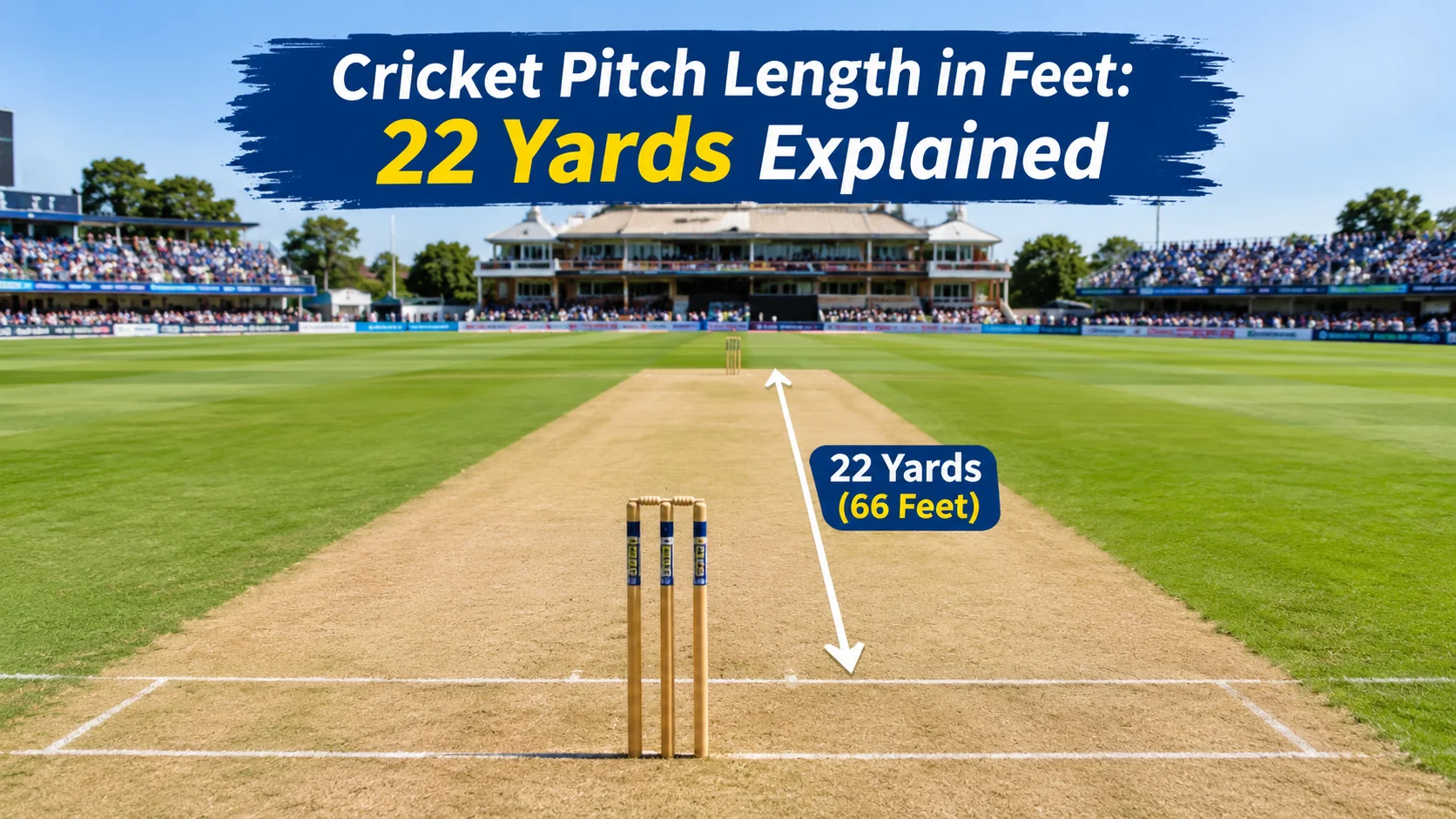
Ever wondered why cricket feels so perfectly balanced? The answer hides in plain sight right beneath the players’ feet. The cricket pitch length in feet is 66 feet, and this magical figure determines every delivery, every shot and every dramatic turn of events. If you are an inquisitive fan or simply learning about cricket through Playcric, this measurement will provide you with better insight into the game. This is not done by chance but is based on science, history, and tradition. Ready to discover why those 22 yards matter so much? Let’s break it down together.
What Makes the Cricket Pitch Length in Feet So Special?
The cricket pitch length in feet spans 66 feet from wicket to wicket. Simple, right? Not quite. This measurement creates the perfect tension between bat and ball. The pitch length in feet gives fast bowlers enough runway to generate serious pace while offering batters a split-second to react. That’s the beauty of it: both sides get a fair shot. Therefore, the standard cricket pitch size ensures the contest stays balanced, no matter how cricket evolves. Meanwhile, every player benefits from this carefully tuned distance.
The Science Behind 22 Yards in Cricket
Why does this exact distance work so well? Let’s explore the physics.
Reaction Time Matters
When a fast bowler releases the ball at 90 mph, the batter gets roughly 0.4 to 0.5 seconds to react. That’s barely a blink! Also, the 22 yards in cricket provide just enough time to spot the ball, judge its line, and execute a shot. Shorter distances would make batting nearly impossible against speed. Longer ones would give batters too much breathing room. Consequently, the cricket pitch dimensions exist for this delicate balance. The cricket pitch length in feet creates this split-second drama.
Ball Physics Comes Into Play
This distance provides room for the ball to bounce, swing, or spin before it gets to the batsman. It is something that makes cricket exciting, according to experts in cricket pitch measurement. A shorter pitch would reduce these natural movements. In contrast, the 22 yards in cricket give bowlers room to work their magic. Still, batters must adapt quickly.
Physical Demands Stay Fair
Running between wickets demands stamina. The standard cricket pitch size sets a reasonable distance for batters to sprint while keeping fielders engaged. It’s physically taxing but not exhausting. Because of this, players pace themselves smartly.
Historical Roots: Gunter’s Chain Connection
Here’s a fun fact: cricket’s pitch measurement comes from land surveying!
In 1620, astronomer Edmund Gunter invented a 66-foot chain for mapping land. This “Gunter’s Chain” became England’s go-to measuring tool. When cricket organisers formalised the rules in 1744, they simply stretched one chain across the grass. That’s how the cricket pitch length in feet became 66 feet! Remember that this measurement survived centuries because it worked perfectly. From rural English fields to massive stadiums worldwide, the Cricket pitch dimensions never changed. Tradition meets practicality – that’s cricket’s charm.
Pitch Dimensions Overview
Curious about the full picture? Here’s what the cricket pitch length in feet includes:
| Dimension | Measurement |
| Wicket-to-Wicket Distance | 66 feet (22 yards / 20.12 meters) |
| Total Length (Base to Base) | 73 feet (24.33 yards / 22.56 meters) |
| Total Width | 10 feet (3.33 yards / 3.05 meters) |
| Bowling Crease Width | 8 feet 8 inches (2.64 meters) |
These measurements define the entire playing zone. Also, the central strip remains the star, though it dictates everything from bowler run-ups to batter positioning.
Why the Cricket Pitch Length in Feet Shapes Strategy
Think about how teams plan. Captains set fields based on the cricket pitch length in feet. Bowlers adjust their lengths. Batters calculate shot timing. Therefore, the fixed distance influences every decision.
For Bowlers
The cricket pitch measurement gives pace bowlers momentum-building space. Swing bowlers use the air time. Spinners exploit the bounce. Every skill hinges on those 66 feet.
For Batters
The set distance gives enough time to play aggressive shots, such as hooks, pulls, and drives. As a result, batters train their eyes and feet together.
Final Recap
The cricket pitch length in feet is not merely a number; it is the heartbeat of cricket. From the time of Gunter’s Chain to the modern stadiums, this measurement has been involved in many historical events. Overall, it finds a balance between strength and accuracy, speed and responsiveness, and tradition and innovation. Next time you watch a game, pay attention to everything that takes place in that distance of 66 feet. Want to explore more cricket insights? Step into Playcric blog world of stories, analysis, and fan experiences. You are getting started on your cricket journey – now you know the pitch!
Common Questions About the Pitch
1. Is the pitch always exactly 66 feet?
Yes! The distance stays consistent across all professional matches. Grounds vary in size, but the central strip never changes. This consistency keeps cricket fair everywhere. All players play in the same rhythm regardless of the place.
2. Why not shorten or lengthen it?
The ‘Fixed 22’ provides favourable conditions for both bowling and batting. The standard size would have to be changed to upset the balance. Furthermore, fast bowling would dominate on shorter pitches. Batters would feast on longer ones. Nobody wants that. Hence, the distance remaining is still preserved.
3. How does this affect youth cricket?
Younger players use shorter pitches to match their physical development. However, the adult measurement remains fixed. That 66-foot standard stays sacred in professional play.